Why Hybrid Flooring Is Becoming So Popular on Staircases
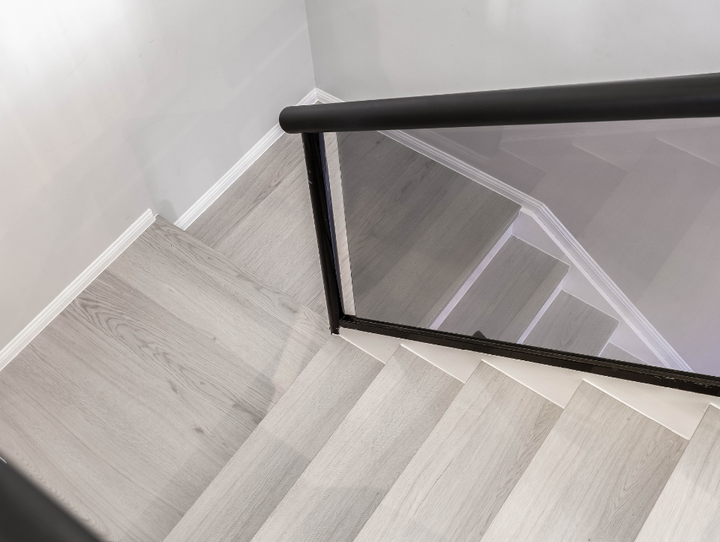
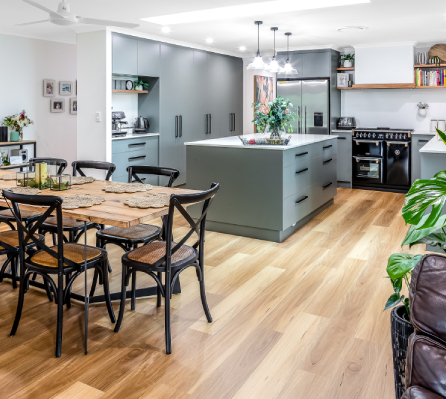
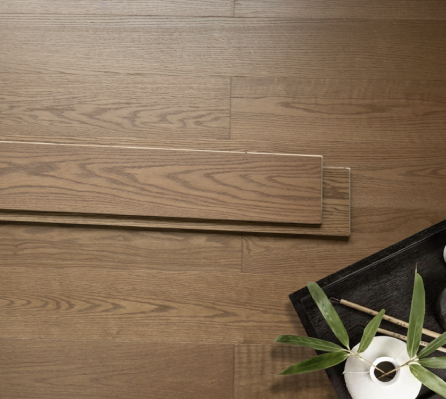
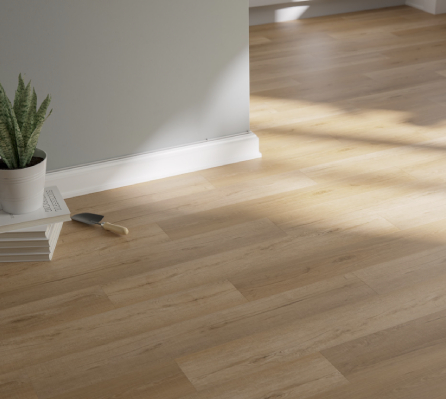
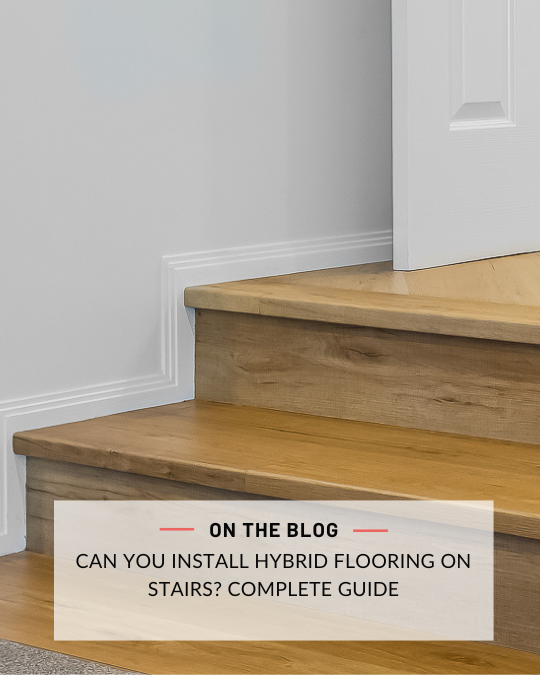
Hybrid flooring on staircases is quickly becoming one of the most popular choices for modern homes. With Homely’s hybrid flooring looking incredibly realistic, many homeowners are choosing it over traditional hardwood timber to create a seamless timber-look finish throughout the entire home, including the staircase.
A quality hybrid is extremely hard-wearing, durable and low-maintenance, which makes it particularly well suited to stairs — one of the highest-traffic areas of any home. Unlike natural timber, there is no ongoing sanding, polishing or refinishing required to maintain its appearance.
When the staircase is finished with properly designed, colour-matched stair nosings, the flooring can flow from the main floor directly onto the stairs, creating a clean, architectural finish that looks intentional rather than like an afterthought.
What You’ll Need
Before any hybrid flooring goes near a staircase, a proper installation involves:
- Hybrid flooring planks (matching your chosen range)
- Matching stair nosing and riser planks (or white is an option)
- A structural-grade adhesive suited to both the flooring and the sub-step (MS-type adhesives are commonly recommended)
- Plywood for build-out packing, where needed
- Basic measuring and cutting tools, plus a stair nose jig for cleaner, more accurate nosing cuts
The Real Step-by-Step Process
This is the actual sequence a proper hybrid stair installation follows, not a simplified version.
- Stair-case Preparation. Remove existing floor covering/paint back to the original substrate (concrete or timber). That substrate then needs to be clean, dry, structurally sound,
- Compliance Check. Each step gets inspected for consistent riser heights and even tread depths, (Check with the Australian Standard) with no excessive variation or movement. Any step that doesn’t check out gets corrected before installation continues, installing over an inconsistent staircase just locks the problem in permanently.
- Build-Out (Where Needed). If the existing staircase has a nosing profile already sitting proud of the riser, plywood is used to pack it out and build a flush, flat face in line with the nosing. No voids, no soft spots – this gets glued and nailed on solid.
- Riser Installation. The riser plank is measured, cut, and installed flush with the top of the tread substrate. This matters more than it sounds, the riser is what supports the leading edge of the nosing once everything is glued down. A tight fit here.
- Stair Nosing Installation. The nosing is measured and cut to suit the tread width, then a generous, continuous bead (full spread) of adhesive goes down across the tread and contact surfaces. The nosing is then positioned firmly in place. This is the step that matters most for long-term performance: the riser plank needs to sit tight underneath and support the front edge of the nosing, with full contact and no voids underneath, and firm pressure applied for proper adhesion.
- Finishing. Excess adhesive gets cleaned off immediately, and the nosing gets checked to make sure it’s level, fully supported, Adhesive is then left to cure per the manufacturer’s timeframe before the stairs are used.
A few non-negotiables that apply throughout:
- Nosings are non-structural, but they still need full support, never installed as a floating application
- The top landing nosing shouldn’t be locked into the floating floor system with the rest of the flooring, a slimline profile trim keeps the expansion gap needed for natural floor movement elsewhere in the house
- Nosings should never go over loose, uneven, or unprepared surfaces
DIY or Professional Installation?
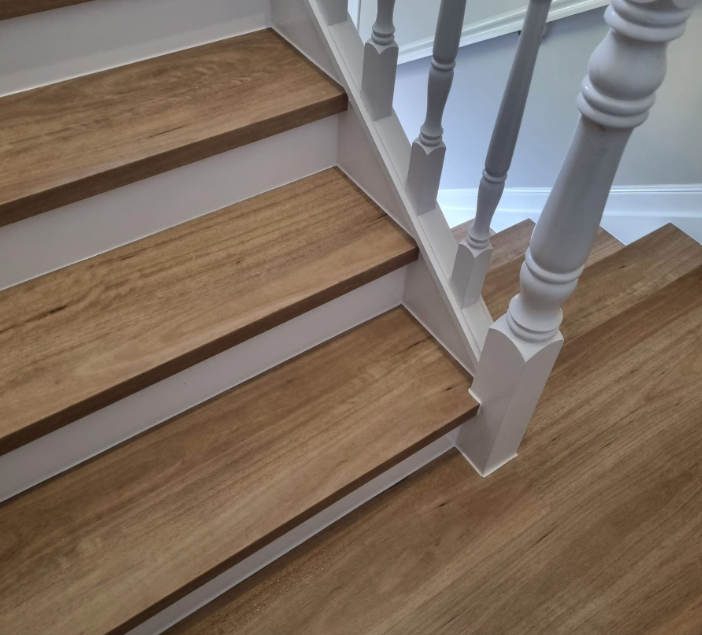
Here’s the honest answer: stair nosing and stair flooring installation should be carried out by a qualified professional. This isn’t just a liability disclaimer – stairs combine structural bonding, compliance checks, and precision cutting in a way that’s far less forgiving than flat, open-plan flooring. A mistake on a stair nosing shows up immediately (a lifted edge, a gap, a wobble underfoot) and it’s in the exact spot your foot lands every time you use the stairs.
That said, tools like a proper stair nose jig are designed to make the nosing cuts themselves more accurate and efficient, useful for both trade professionals and confident, experienced DIYers working alongside someone who knows the compliance and adhesive requirements.
Where Stair Nosing Fits In
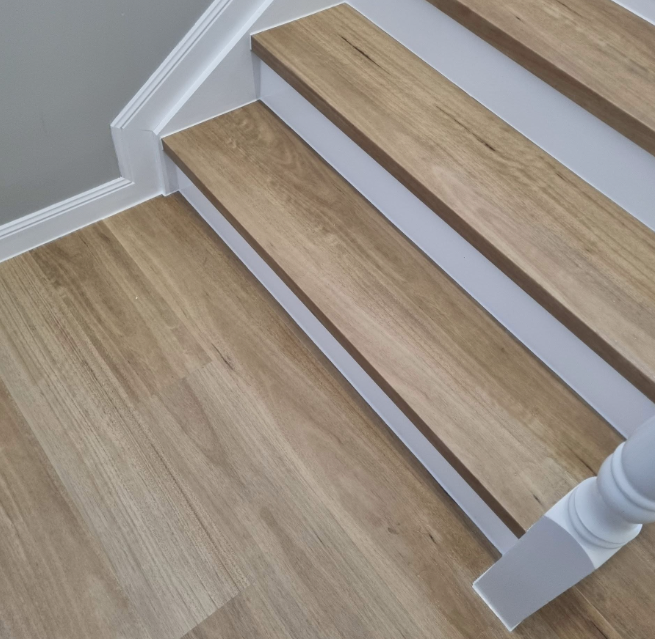
Everything above hinges on getting the stair nosing right, it’s the single component doing the most work on any staircase. If you want the full picture on why nosing matters and how colour-matching works, we’ve covered that in detail in Transform Your Stairs with Hybrid Flooring Stair Nosing.
For Homely Flooring Hybrid specifically, we supply colour-matched stair nosing in 12 colours, including a Turning Step Stair Nosing with Locking System (1.5m lengths) that uses the same Unilin locking system as our hybrid plank, it locks straight into the landing board for a seamless finish, and works on winding stairs as well as straight flights. This range was recognised as 2025 ATFA Innovative Product of the Year. If you’re working with a different flooring brand, we can also supply matching nosing for most other hybrid or engineered timber products we distribute, with pricing quoted on application.
FAQs
Can hybrid flooring be installed on stairs? Yes. Hybrid flooring is well-suited to stairs due to its rigid, moisture-resistant core, provided it’s installed correctly with full adhesive support and matching stair nosing.
Can I install hybrid flooring on stairs myself? It’s technically possible for an experienced installer, but professional installation is strongly recommended for stairs specifically, since compliance checks, substrate preparation, and structural bonding all have to be done correctly to avoid safety issues down the track.
Can the riser be white to make a feature of each Tread? 100%, yes, the riser can be white. Pre-paint a piece of ply (cut this to the shape) and use that instead of a colour-matched plank.
Can hybrid flooring be installed as a floating floor on stairs? No. Unlike open-plan floating floor installations elsewhere in the home, stair nosing and stair flooring must be fully bonded with structural adhesive — never installed as a floating application.
How long does hybrid flooring last on stairs? With correct installation and normal use, hybrid flooring on stairs can last many decades, since its rigid core is built to handle the concentrated wear that stair edges take.
Ready to plan your staircase project properly? Get in touch with our team or browse our Hybrid Flooring range.
Homely Flooring is a family-owned flooring supplier based in Brendale, Brisbane, specialising in hybrid, vinyl, and engineered timber flooring, along with matching accessories like stair nosing, trims, and skirting for homeowners, DIYers, and trade professionals alike.