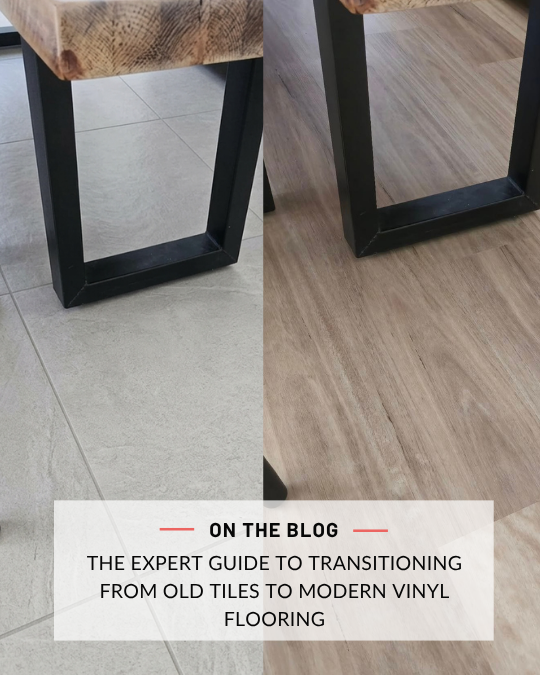
Thinking about updating your home’s aesthetic but tired of the sound of a jackhammer? For many Brisbane homeowners, transitioning from tile to vinyl is the best way to avoid the stress of a major renovation. The dust, the noise, and the sheer cost of demolition can be enough to put any project on hold.
But there is a smarter way. Transitioning from tile to modern vinyl flooring is becoming the gold standard for high-end Brisbane renovations. It allows you to achieve a stunning timber-look finish without the mess of a full tear-out.
However, success isn’t just about laying planks; it’s about the professional preparation beneath the surface. Here is everything you need to know about making the switch.
Can You Really Lay Vinyl Over Tile?
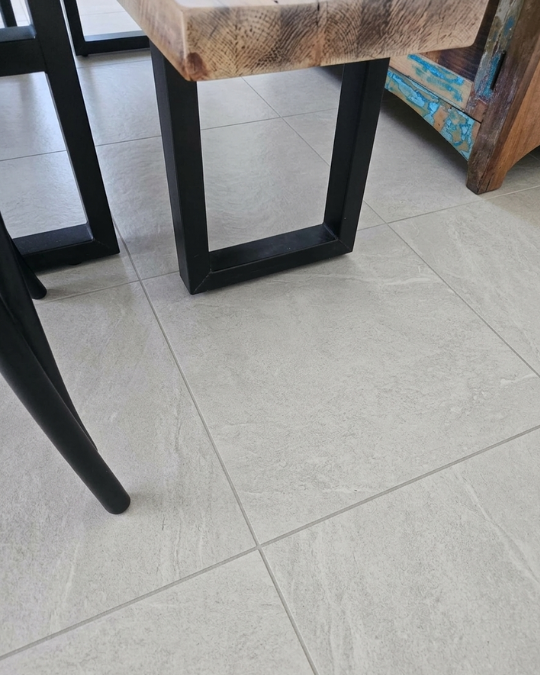
The short answer is yes, but only if the “bones” are right. To ensure a “done right” finish that lasts for decades, our team performs a professional site assessment to check for two critical factors:
- Structural Soundness: We check for “drummy” or loose tiles. If a tile is moving or sounding hollow, it won’t support a new floor. These must be secured or removed before proceeding to ensure the foundation is stable.
- Flatness vs. Level: While a floor doesn’t always have to be perfectly level, it must be perfectly flat. Modern vinyl plank flooring is flexible. If there are dips or “lippage” (uneven tile edges), those imperfections will eventually “telegraph” through to your new floor, ruining the finish. We use professional grinding and leveling to prevent this.
The Secret is in the Professional Prep
This is where the difference between a DIY attempt and a professional installation becomes clear. To ensure a seamless finish, our team follows a strict preparation protocol:
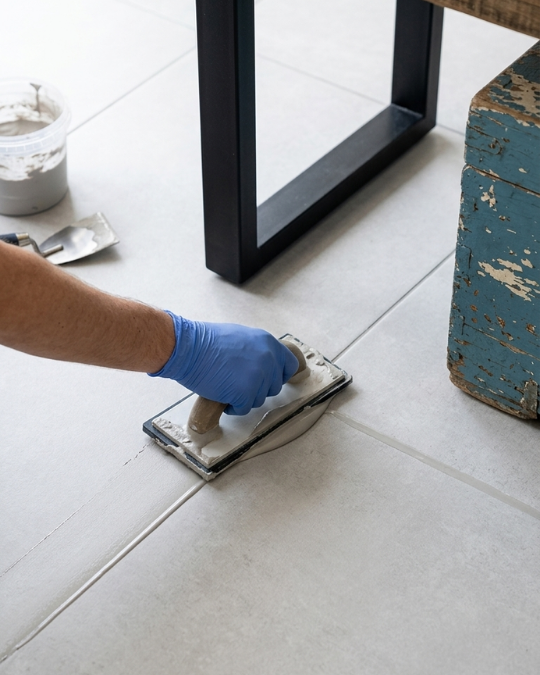
• Filling the Grout Lines: We don’t just lay vinyl over the grid. We use a professional-grade patching compound to fill every grout line. This creates a smooth, monolithic subfloor so you never see a “ghosting” pattern of the old tiles through your new planks.
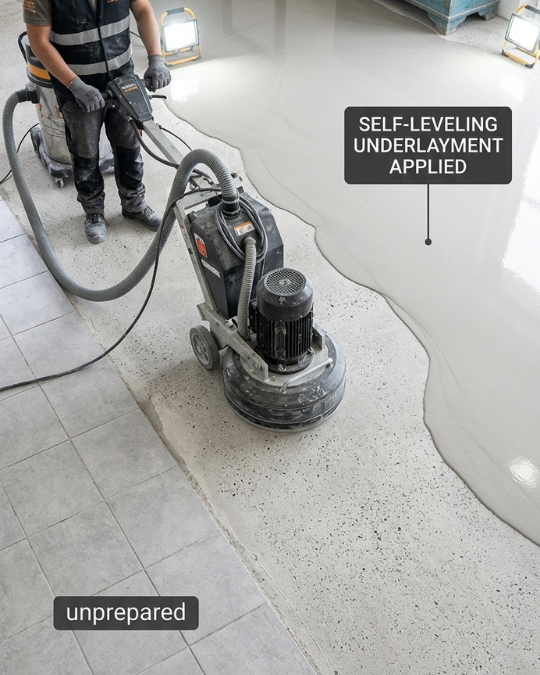
• Grinding and Leveling: If your old tiles have high spots, we use professional grinding equipment to smooth them down. We then apply a self-leveling topping where necessary to ensure the surface is like glass before the first plank is laid.
Why Brisbane Families are Making the Switch
Beyond the saved demolition costs, transitioning from tile to vinyl offers lifestyle benefits that cold, hard tiles simply can’t match:
- Acoustic Comfort: Tired of the “clack-clack” of heels or pet claws on hard tiles? Our vinyl planks, featuring integrated acoustic backing, are significantly quieter and absorb sound rather than reflecting it throughout your home. Our vinyl planks are designed to meet strict Australian acoustic standards for multi-residential and office buildings, ensuring peace and quiet for your space.
- Warmth Underfoot: Brisbane winters can make tile floors feel like ice. Vinyl maintains a much more comfortable, stable temperature year-round, making those early mornings a lot easier on your feet. According to Australian government home design guides, choosing materials that provide better thermal comfort is essential for creating a home that stays comfortable across Brisbane’s changing seasons.
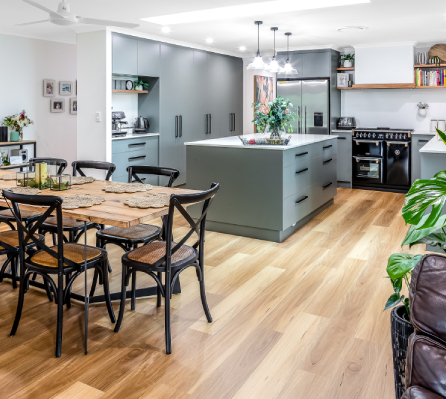
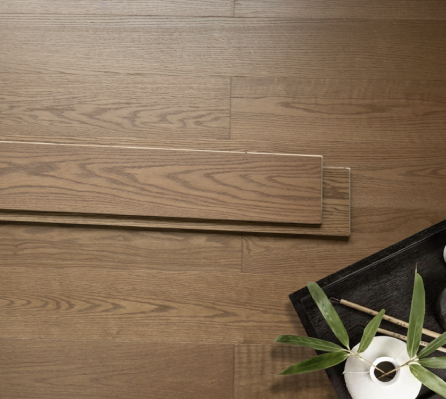
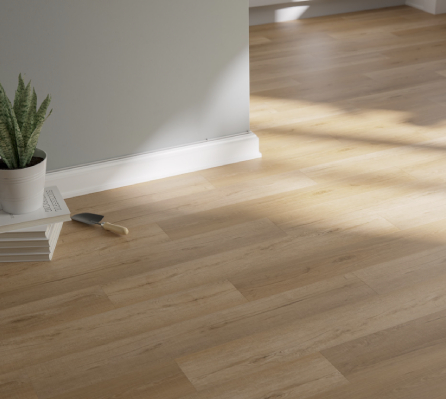
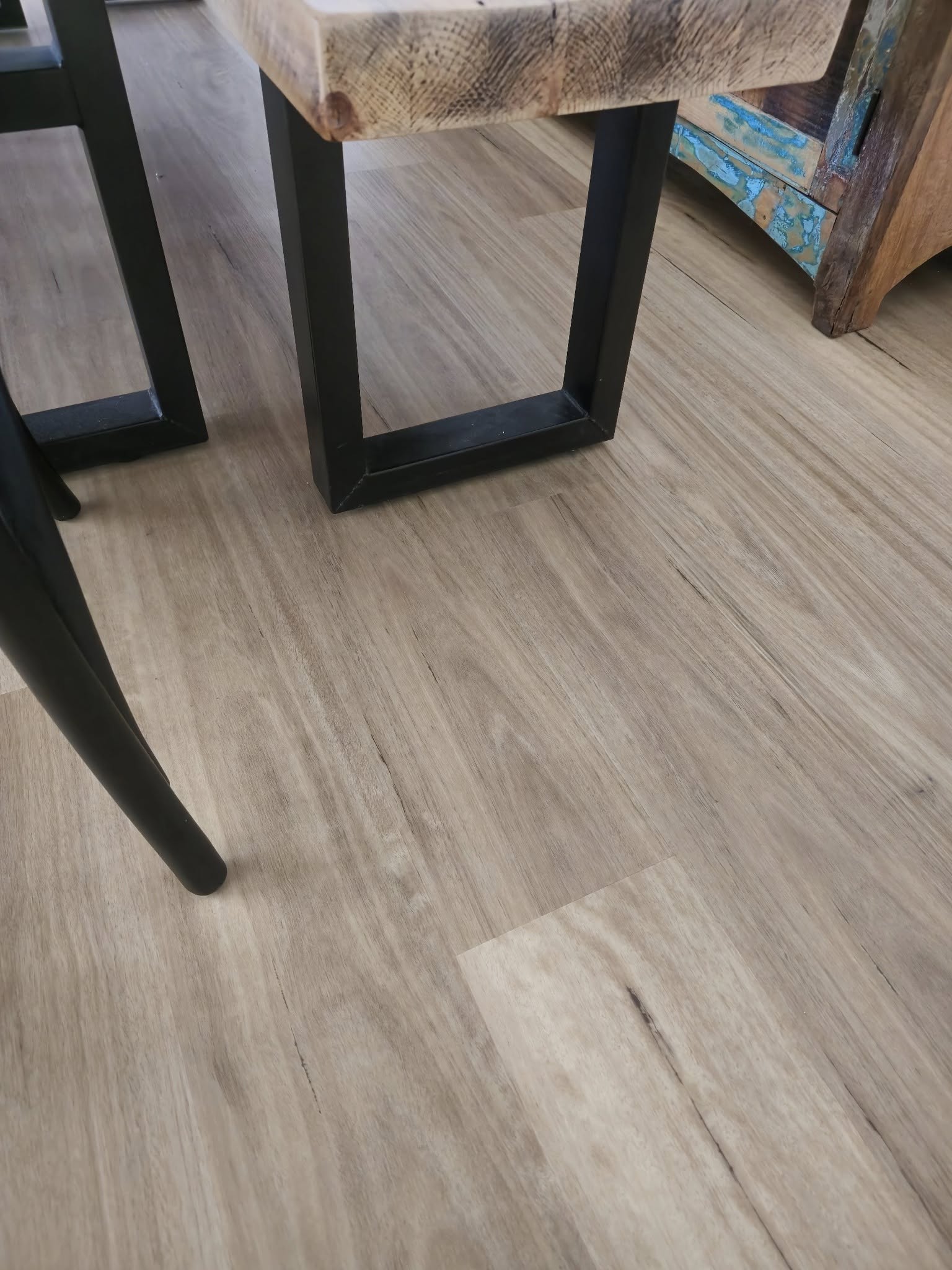
- Modern Aesthetics: Whether you’re looking for the coastal vibes of Natural Oak or the classic Australian look of Native Blackbutt, our premium vinyl offers a realistic texture and depth that rivals the beauty of engineered timber.
Managing the Details: Door Jambs and Heights
A common mistake in “overlay” projects is ignoring the height increase. By adding vinyl over tile, the floor height rises slightly.
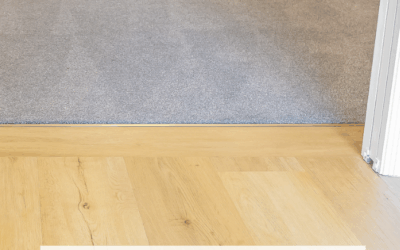
A professional installer knows how to undercut door jambs so the floor slides underneath for a custom-built look. We also utilise colour-matched transition strips and C-Channels to ensure that the transition between your new vinyl and other rooms is safe, sleek, and trip-hazard free.
Ready for a Professional Transformation?
Transitioning from tile to vinyl is the most cost-effective way to completely transform your home’s interior, but the quality of the result depends entirely on the subfloor preparation.
Don’t risk a “hollow” sounding floor or visible grout lines. At Homely Flooring, we specialise in complex professional installations across Brisbane. Visit our Brendale showroom to see our range of premium vinyl planks in person, or contact our team today for a professional site assessment.
FAQs
1. Is it better to remove the old tile or just lay vinyl over it?
If your existing tiles are secure and not cracking, laying vinyl over the top is usually the better choice. This method saves thousands in demolition costs and avoids the massive amount of dust that comes with ripping up ceramic. However, if your tiles are loose or “drummy,” they must be secured or removed first to provide a stable, “done right” base.
2. Will the grout lines show through the new vinyl floor?
This is a common issue called “telegraphing” or “ghosting”. Because vinyl is flexible, it can sink into grout lines over time, creating a visible grid pattern. At Homely Flooring, we prevent this by filling every grout line with a professional-grade patching compound or a self-levelling screed to create a perfectly flat, monolithic surface before installation.
3. How much height will the new floor add?
Modern luxury vinyl planks are quite thin, generally between 3.0mm and 6.0mm. When added on top of your existing tile, the total height increase is minimal roughly the thickness of a smartphone. In most cases, doors can still swing freely, though our professional site assessment will identify if any minor adjustments are needed at the bottom of the doors.
4. Can I walk on the new floor immediately?
If we install a 6.0mm Hybrid/LVP click-system, you can walk on it and move your furniture back in the second we finish! If we use a 3.0mm or 4.5mm direct-stick method for extra stability, we typically recommend waiting 24 hours for the adhesive to fully cure. For all installations, we ensure the Brisbane climate and temperature are factored into the curing process.
5. How long does the installation take?
One of the best parts of transitioning from tile to vinyl is the speed. A standard living area can often be prepped and installed in just 1 to 2 days. A full-home transformation usually takes 3 to 5 days, which is significantly faster than a full tile demolition project.